Coca-Cola is one of the most recognized brands globally, selling billions of servings daily. While consumers pay a premium for a bottle of Coke, the actual manufacturing cost of coca cola is a closely guarded industry secret. For entrepreneurs looking to enter the carbonated soft drink (CSD) industry, analyzing the cost structure of market leaders offers valuable insights into profit margins, supply chain dynamics, and production efficiency.
To understand the unit economics, we must break down a standard 500ml PET bottle of Coca-Cola into its core components. The manufacturing cost generally accounts for a small fraction of the retail price, with the rest distributed among marketing, distribution, retailer margins, and brand equity.
Estimated Direct Production Cost: Excluding marketing, distribution, and company overheads, the direct manufacturing cost of a 500ml bottle of carbonated soft drink is approximately ₹4.00 to ₹5.50, whereas its retail price is ₹30.00 to ₹40.00.
The high profit margin in the beverage industry is offset by heavy spending on marketing and distribution. For a new brand, competing with giants requires optimizing local logistics and investing in flexible, high-efficiency machinery:
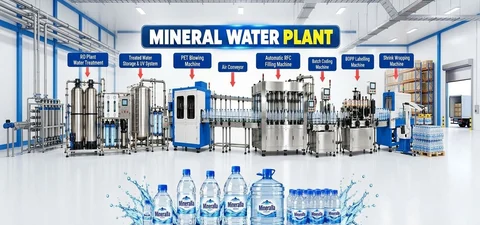
At Krupashindu, we engineer complete, customized soft drink production lines. Whether you want to configure high-pressure carbonators or install automated RFC filling monoblocks, our team helps you control your manufacturing costs and maximize operational margins.
Leading Mineral Water Plant Manufacturer in India. Turnkey setup, machinery pricing, and BIS/ FSSAI licensing.