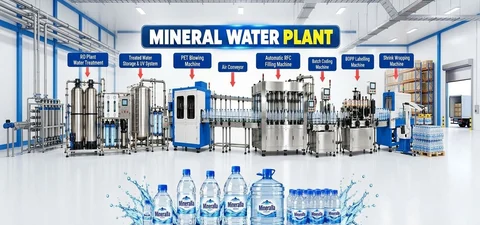
The bottled water industry offers immense potential, yet many new entrants struggle to sustain their operations. Success isn't just about having the right equipment; it's about avoiding the strategic and operational blunders that can sink a business before it even takes off. Here are the top 7 mistakes to watch out for.
In India, selling packaged drinking water without a valid ISI mark (IS:14543) is illegal and can lead to heavy fines or plant closure. Many entrepreneurs underestimate the time and documentation required for BIS certification. Ensure your plant is built to BIS standards from day one to avoid costly modifications later.
Your treatment plant is designed based on the quality of your raw water. Failing to conduct a comprehensive water analysis (including seasonal variations) can lead to choosing the wrong filtration technology. If your source water has high salinity or specific contaminants like fluoride, a standard RO system might not be enough.
While it's tempting to opt for cheaper, non-branded machinery, this often leads to frequent breakdowns, high maintenance costs, and inconsistent water quality. Invest in high-grade SS 316L components and reliable automation. Remember, your plant's downtime is lost revenue.
A cluttered or poorly designed plant layout can lead to cross-contamination. BIS has strict guidelines regarding the "Clean Room" where filling and capping occur. Neglecting hygiene protocols for staff and equipment can result in batch recalls and damage to your brand's reputation.
In a crowded market, your bottle is your silent salesman. Many businesses use generic labels and low-quality preforms that leak or look unprofessional. Focus on a unique brand identity and ergonomic bottle design to stand out on the retail shelf.
You can produce the purest water in the world, but if you can't get it to the consumer, you won't make a profit. Many plant owners focus 100% on production and 0% on building a distribution network. Secure your supply chain and tie up with local retailers and distributors before you start full-scale production.
Relying solely on external labs for testing is a mistake. An in-house laboratory is essential for hourly quality checks of pH, TDS, and microbiological parameters. Consistent quality is what builds long-term consumer trust.
At Krupashindu, we don't just provide machinery; we provide a roadmap for success. Our turnkey solutions include guidance on BIS Compliance, layout design, and quality management to help you avoid these common traps.
Leading Mineral Water Plant Manufacturer in India. Turnkey setup, machinery pricing, and BIS/ FSSAI licensing.