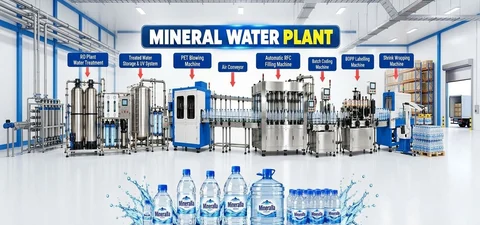
Drafting a detailed mineral water plant project report is the most critical planning phase when starting a water business. Whether you are applying for a bank loan under schemes like PMEGP, seeking capital from private investors, or applying for government subsidies, a professional project report is mandatory. It acts as a feasibility study, demonstrating that your small mineral water plant will generate stable cash flows and returns. Let's look at how to draft one step-by-step.
A bankable project report is generally structured into five core chapters:
An overview of your business plan, including promoter experience, registration details (Partnership, LLP, or OPC), project capacity (e.g., 2000 LPH), and total budget requirements.
This section outlines your technical setup. You must specify the source of raw water (borewell or municipal supply), raw water test parameters (TDS, heavy metals, biological load), and detail the filtration stages: pressure sand filter, activated carbon filter, softener, RO membrane skid, mineral dosing, UV sterilizer, and ozone generator.
A diagram demonstrating the plant layout, civil construction area (usually 1,000-1,500 sq.ft.), and utility requirements, including power (minimum 25 HP connection) and water source yields.
Detail your target market (retailers, hotels, events, or corporate offices), local competitor analysis, pricing strategy, and distribution logistics.
This is what bank officers review closest. It must contain:
For a typical 2,000 LPH plant in India, the cost breakdown for a bank loan application might look like this:
Writing a project report from scratch can be challenging if you don't have engineering and financial templates. At Krupashindu, we assist our turnkey clients by providing customized project layout drawings, technical design plans, and professional project reports tailored for bank loan approvals. Learn more about our comprehensive Industrial RO Purification Systems or contact our consulting desk to draft your report.
Leading Mineral Water Plant Manufacturer in India. Turnkey setup, machinery pricing, and BIS/ FSSAI licensing.